
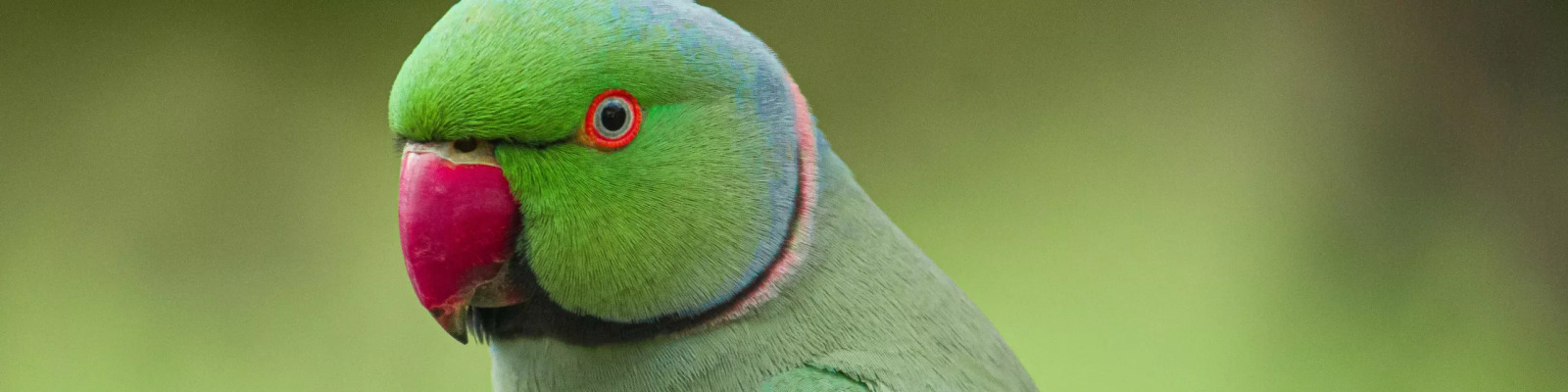
Psittacula eupatria and Psittacula krameri: species purity, hybrid or not?
25/04/2026
DNA testing and the question of species purity: what a species determination and a mutation screening can, and cannot, tell you about the Alexandrine and Rose-ringed parakeet.
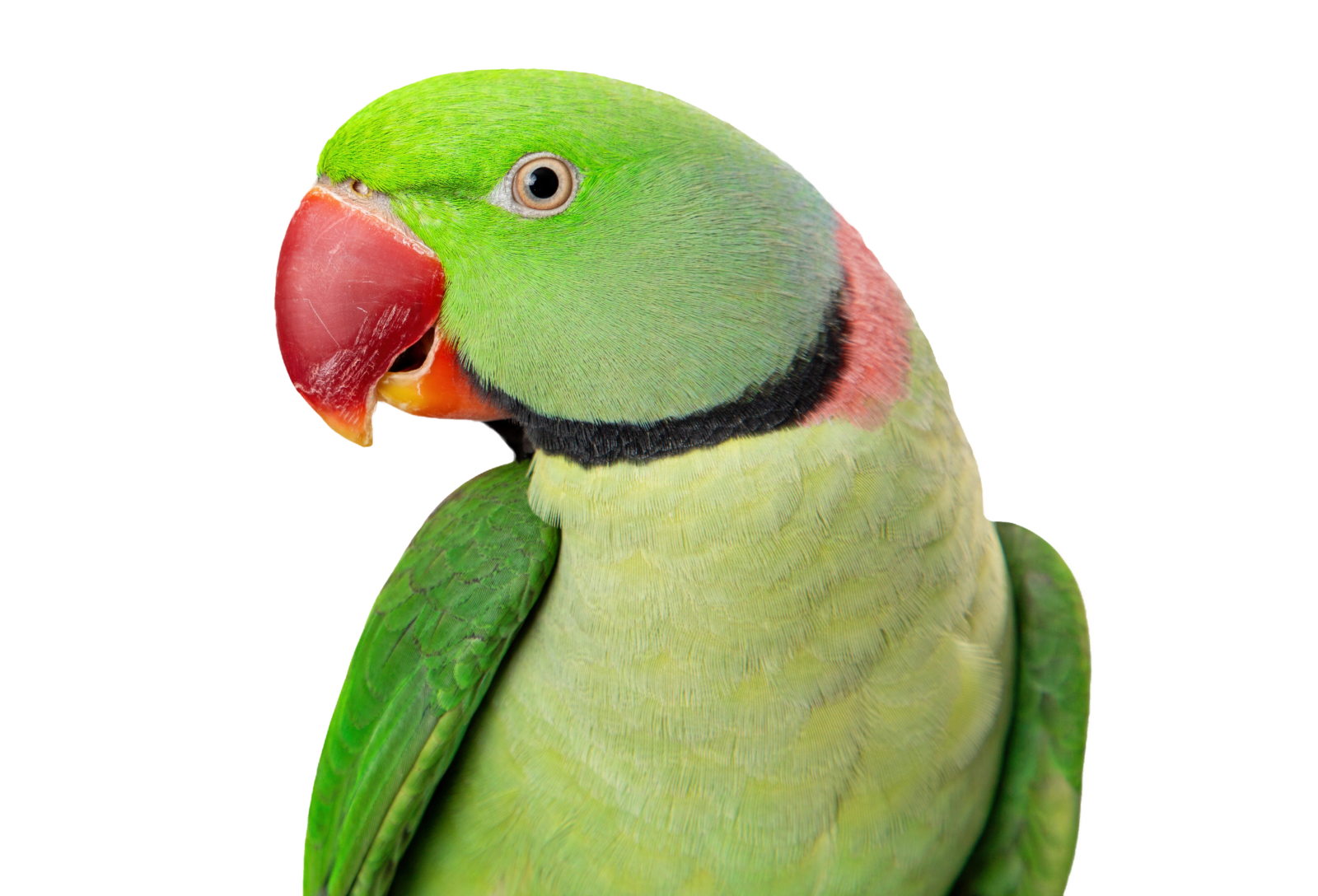
Psittacula eupatria and Psittacula krameri: species purity, hybrid or not?
The debate over species purity between the Alexandrine Parakeet (Psittacula eupatria) and the Rose-ringed Parakeet (Psittacula krameri) has run for decades and often sparks heated discussion among enthusiasts. What can DNA testing tell us about it today?
In this blog post we set out what DNA testing can and cannot say about these two species, and which two analyses you can combine to get as close as possible to an answer.
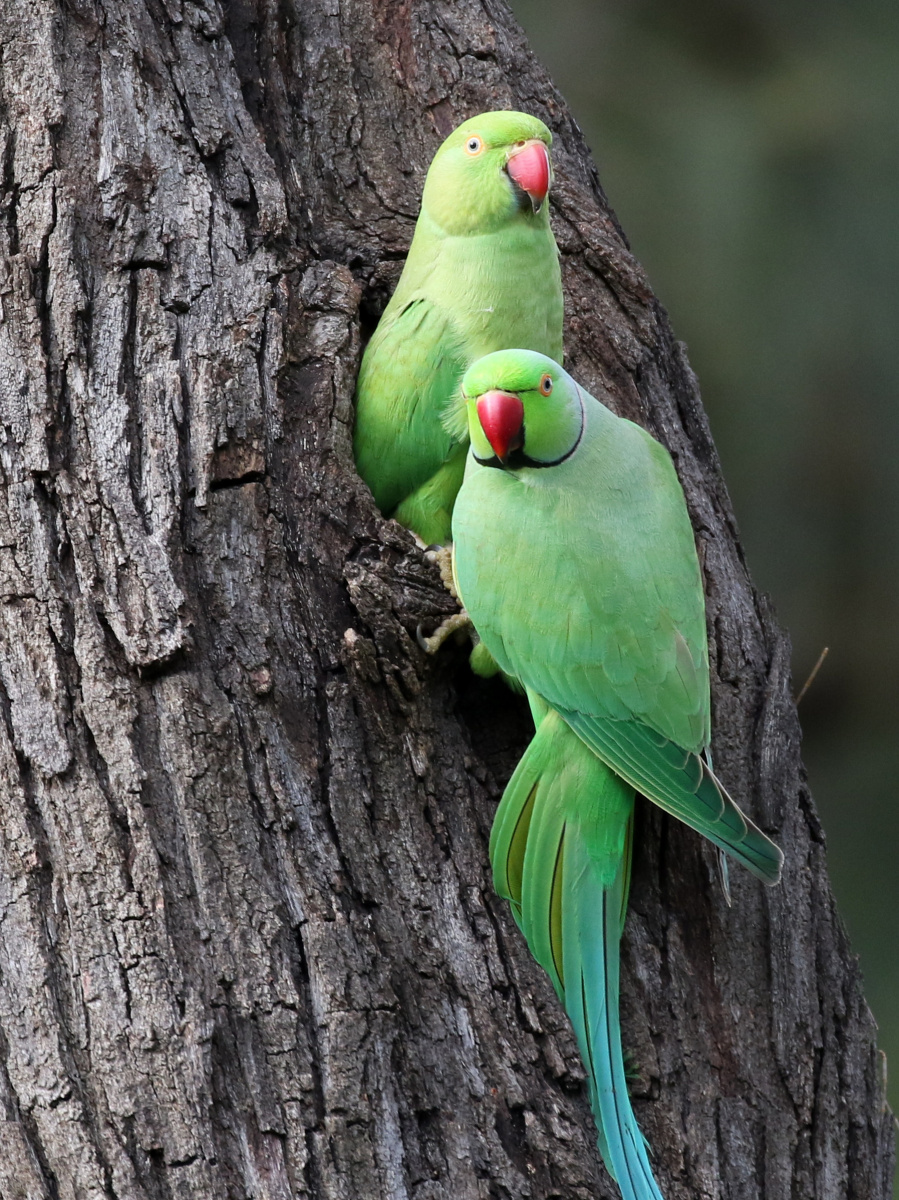
Are wild-caught birds species-pure?
The Psittacula eupatria and the Psittacula krameri are genetically compatible and produce fertile offspring. This is not theory: in feral European populations, where both species now occur side by side (sympatric), hybrids have been recorded repeatedly. Krause (2004) documented both F1 and F2 hybrids in the Volksgarten in Düsseldorf. The existence of F2 hybrids proves that the F1 generation was fertile. More recently, hybrids were also recorded in Spain (Postigo, 2016). Hybridisation between the two species therefore occurs in wild populations as well, and is not biologically exceptional.
A second, less discussed layer: what do we actually mean by "species-pure"? The Psittacula krameri has four recognised subspecies (krameri, borealis, manillensis, parvirostris). The Psittacula eupatria has five. The feral European Psittacula krameri populations turn out to be intraspecific hybrids between different subspecies in their own right. Species purity is therefore already a tricky concept at subspecies level, and wild-caught origin is in no way a guarantee of purity.
A brief historical context is useful.
The Psittacula eupatria and the Psittacula krameri are closely related but clearly distinct species. Based on mitochondrial cytochrome b sequences, Groombridge et al. (2004) place the split between the two lineages at 2.5 to 7.7 million years ago. Although that sounds like a long time, in evolutionary terms it is still relatively short. As a result, the two species are still genetically similar enough to one another. Because their genetic material corresponds closely, they can still reproduce with each other and produce offspring.
In other words: they are indeed separate species, but they have not yet grown so far apart that crossing has become impossible.
A complete purity test does not yet exist. What we can offer are two complementary types of analysis that together provide a great deal of clarity.
.
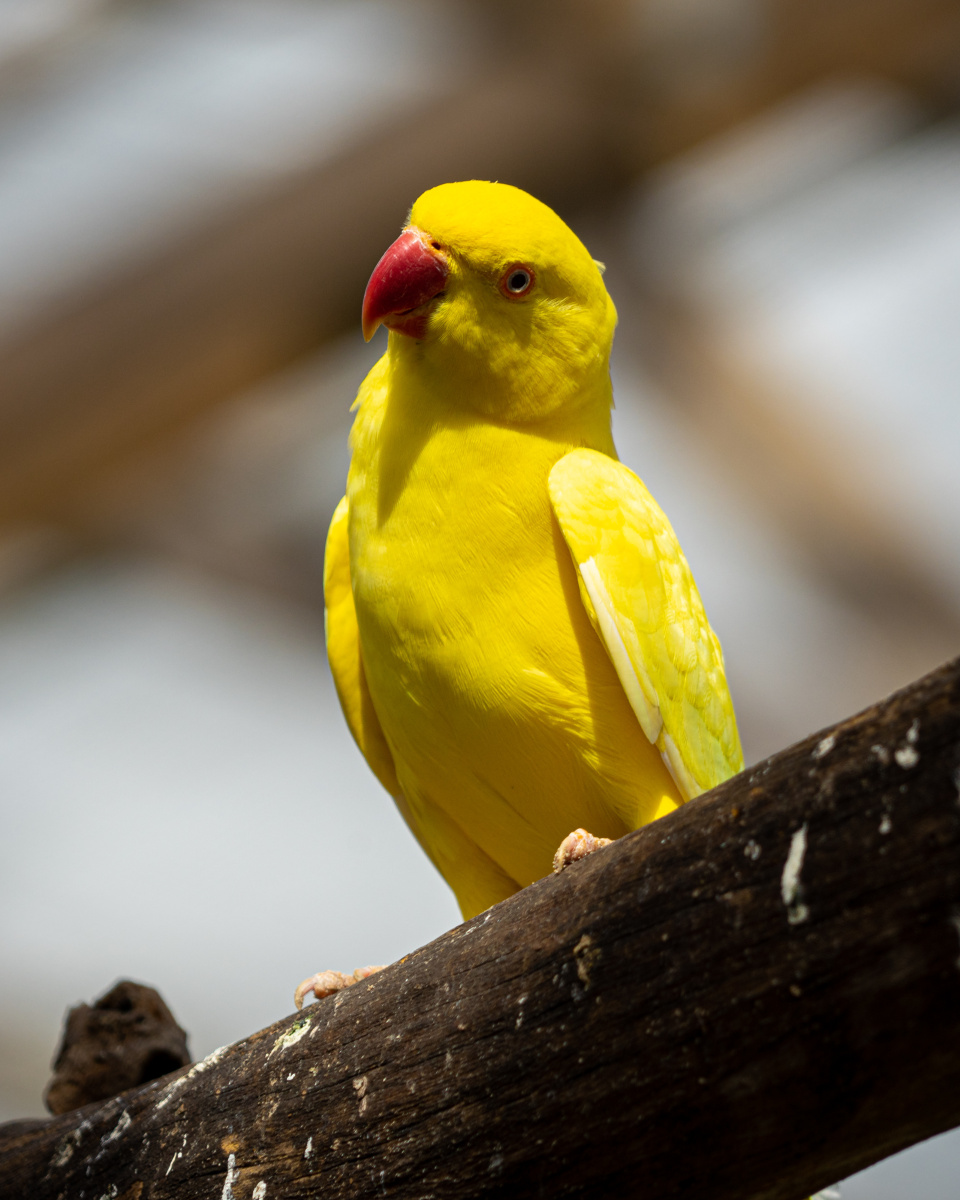
How does mutation screening work as indirect evidence?
Our mutation tests provide a second, indirect layer. The logic is genetically sound:
A spontaneous mutation arises at one specific position in the genome, in a single individual, at some point in history. The chance that exactly the same mutation arises twice, independently, in two different species, at exactly the same spot in the gene, is extremely small.
Two concrete examples from our own data:
SL ino2.
This mutation occurs in both the Psittacula eupatria and the Psittacula krameri, at exactly the same position in the gene. Arising spontaneously and independently twice is genetically all but ruled out.
Far more likely: the mutation first arose in one species and then passed to the other through introgressive hybridisation. SL ino2 probably arose originally in the Psittacula krameri and later crept into the Psittacula eupatria, whether in captivity or in the wild. An Psittacula eupatria carrying SL ino2 is therefore very likely to have Psittacula krameri in its ancestry. You can read more about the SL ino mutations in our blog post on lutino.
Blue4 and blue5.
These two blue mutations are typical of the Psittacula krameri. When we nevertheless detect them in a Psittacula eupatria, this strongly points to crossing-in from the Psittacula krameri. We therefore screen Psittacula eupatria bloodlines first for blue1, blue2 and blue3. The presence of blue4 or blue5 in a bird kept as a Psittacula eupatria is in itself already a signal. More on the blue series in our blog post on blue, aqua and turquoise.
The nuance that goes with it
The absence of evidence is not the same as evidence of absence.
SL ino1, SL ino5, blue1, blue2 and blue3 we have so far confirmed exclusively in the Psittacula eupatria. That need not mean they have never arisen spontaneously in the Psittacula krameri, or were ever crossed in. At this point it only means: we have not yet picked them up there. Further research and broader sampling may adjust that picture in the future.